About Electrical Earthing Transformer
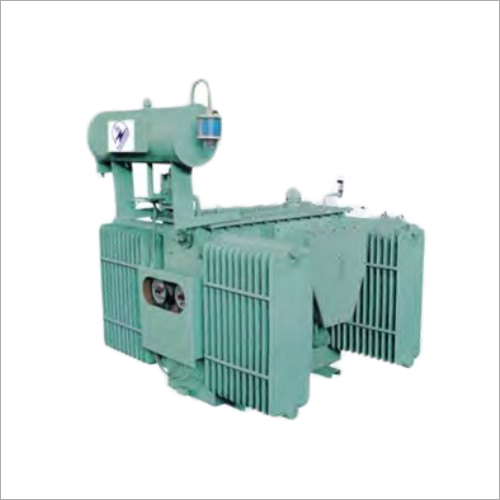
We are one of the leading manufacturers and suppliers of Electrical Earthing Transformer that is commonly used as a safety mechanism in various industrial applications. It is fixed with an oil cool unit to lower down the temperature that ultimately leads to a longer life without the risk of damages. It runs on standard voltages in between 415 to 440 volts for smooth and efficient functioning. The outer body of the Electrical Earthing Transformer is provided with a series of fins to efficiently dissipate heat generated within the coils.
|
Brand
|
NGG Power Tech
|
|
Cooling Type
|
Oil Cooled
|
|
Phase
|
Single Phase
|
|
Power
|
Upto 4 MVA
|
|
Current
|
21 A
|
|
Country of Origin
|
Made in India
|
|
Material
|
Mild Steel
|
Engineered for Reliability and ProtectionElectrical Earthing Transformers provide a critical link for grounding in substations and industrial power systems. Compliant with global standards (IS, IEC, ANSI), these transformers are designed with a dielectric strength exceeding 55 kV, robust anti-corrosive finishing, and a cooling system based on transformer oil (ONAN type), ensuring safe operation in harsh environments.
Versatile Design for Varied InstallationsOur transformers accommodate both pole and floor mounting, with top or side terminal arrangements based on application needs. The combination of mild or stainless steel tanks, adaptable protection (IP23/IP44), and custom output capacity support diverse system requirements for maximum flexibility and performance.
FAQs of Electrical Earthing Transformer:
Q: How does an electrical earthing transformer function in power system protection?
A: An electrical earthing transformer provides a neutral point for system grounding, enabling the dissipation of fault currents and safeguarding equipment and personnel. It limits the voltage rise during earth faults, ensuring stability and safety in substations and industrial installations.
Q: What are the key standards these transformers comply with?
A: Our earthing transformers adhere to IS 2026, IEC 60076, and ANSI standards, ensuring reliable performance and safe operation. They also meet requirements for short circuit withstand capability and impedance voltage as per international and national specifications.
Q: When should I consider using a pole-mounted versus a floor-mounted earthing transformer?
A: Pole-mounted transformers are ideal for overhead distribution networks where space constraints arise, while floor-mounted options suit substation or industrial settings with dedicated transformer yards or rooms. The choice depends on site conditions and operational requirements.
Q: Where are these transformers typically installed and used?
A: These earthing transformers are commonly installed in substations, industrial plants, and locations requiring neutral point grounding for effective fault management. Their indoor/outdoor compatibility and IP23/IP44 protection class enable deployment in varied working conditions.
Q: What is the process for customizing the transformer output and configuration?
A: Customization is achieved by assessing your systems technical requirements, such as voltage, power, impedance, and mounting. Output, coil configuration (single or dual), terminal arrangement, and accessories are tailored during manufacturing to meet specific project needs.
Q: How do specific accessories like oil level gauges or Buchholz relays benefit transformer operation?
A: Oil level gauges monitor transformer oil quantity, essential for proper insulation and cooling. Temperature indicators aid in thermal management, while Buchholz relays enhance fault detection, providing early warning of internal faults and increasing safety and lifespan.
Q: What are the main benefits of using copper/CRGO silicon steel and laminated core construction?
A: Copper windings and CRGO (cold-rolled grain-oriented) silicon steel cores minimize energy losses and increase efficiency. Laminated core construction reduces eddy current losses, contributing to the transformers high efficiency (98%) and reliable long-term operation.



 English
 Spanish
 French
 German
 Italian
 Chinese (Simplified)
 Japanese
 Korean
 Arabic
 Portuguese





 Send Inquiry

 Send Inquiry
 Send Inquiry
 Send SMS
 Call Me Free